
The Benefits of Applying Drying Powders to Newborn Piglets
Newborn piglets enter the world with very limited energy reserves, no maternal licking, and a high susceptibility to hypothermia. Effective early‑life thermal management is therefore critical to survival, vigour, and early colostrum intake. Among the practical interventions available to farmers, the use of drying powders has gained increasing attention for its ability to rapidly reduce heat loss and improve piglet viability.

This article reviews the scientific evidence behind drying interventions, with a particular focus on drying powders, and summarises their benefits for piglet health, welfare, and productivity.
1. Why Drying Matters in the First Minutes of Life
Piglets are born wet, with minimal insulation and a high surface‑area‑to‑volume ratio, making them extremely vulnerable to rapid heat loss. Hypothermia in the first hours after birth is strongly associated with reduced mobility, delayed teat seeking, lower colostrum intake, and increased mortality.
A 2019 knowledge summary from the Royal Veterinary College concluded that drying piglets improves thermoregulation and can reduce pre‑weaning mortality, although the strength of evidence varies between studies.
2. Evidence for Reduced Heat Loss and Improved Thermoregulation
Several controlled studies have demonstrated that drying—whether by towels, heat lamps, or desiccant powders—reduces the decline in rectal temperature after birth.
A 2021 study in Translational Animal Science found that piglets dried with a desiccant maintained significantly higher rectal temperatures between 20 and 60 minutes after birth compared with undried controls. The effect was especially pronounced in low‑birth‑weight piglets, who are at greatest risk of hypothermia.
Maintaining body temperature in this early window is strongly linked to:
- Faster teat seeking
- Higher colostrum intake
- Improved immune status
- Reduced mortality risk
These relationships are well‑established in neonatal physiology and reinforced by multiple studies cited within the same research.
3. Impact on Pre‑Weaning Mortality
Mortality reductions associated with drying interventions have been reported across several trials:
- Christison et al. (1997) found mortality of 21% in undried piglets compared with 6% in dried piglets and 0% in piglets placed under a heat lamp.
- Andersen et al. (2009) reported lower mortality in both heat‑lamp and dried‑plus‑heat‑lamp groups compared with controls.
- The RVC knowledge summary (2019) concluded that drying can form part of a suite of interventions to reduce mortality, although cost‑effectiveness varies by system.
While drying powders are not always evaluated separately from other methods, the evidence consistently shows that any effective drying intervention reduces mortality risk, particularly in colder farrowing environments.
4. Specific Advantages of Drying Powders
Drying powders offer several practical and biological benefits beyond manual drying:
4.1 Rapid Moisture Absorption
Commercial desiccant powders can absorb several times their weight in moisture, drying piglets within seconds and reducing evaporative heat loss more quickly than towels or ambient heat alone.
4.2 Reduced Pathogen Exposure
Moisture supports bacterial survival. By removing surface moisture, powders reduce microbial load. Some products include plant extracts with antimicrobial properties.
For example, TK GOLDdust® combines drying minerals, clays and plant fibres with a disinfectant, providing high absorbency and reduced infection risk.
4.3 Improved Navel Drying and Hygiene
High‑quality powders help protect delicate neonatal skin, including the navel area, which is a potential entry point for pathogens.
4.4 Enhanced Piglet Vigour
By warming up faster, piglets become more mobile, reach the udder sooner, and ingest colostrum earlier—key factors in survival and growth.
5. When Drying Powders Are Most Beneficial
Drying powders deliver the greatest value in:
- Farrowing rooms below 22°C
- Large litters with high teat competition
- Systems with limited staff availability
- Farms aiming to reduce antibiotic use through improved early‑life hygiene
- Litters with a high proportion of low‑birth‑weight piglets
In these scenarios, rapid drying can make the difference between a piglet thriving or succumbing to chilling, starvation, or crushing.
6. Practical Considerations for Farmers
- Powders are quick and easy to apply, making them suitable for high‑throughput farrowing systems.
- They complement, rather than replace, heat lamps and creep areas.
- Cost‑effectiveness depends on litter size, baseline mortality, and product choice.
- Usage rate is 300+ piglets per bag, improving economic viability and costing 7 pence per piglet in TK GOLDdust.
Conclusion
Drying powders provide a fast, effective, and labour‑efficient method of reducing heat loss in newborn piglets. Scientific evidence shows clear benefits for thermoregulation, early colostrum intake, and survival—particularly in low‑birth‑weight piglets and cooler farrowing environments. While drying alone is not a complete solution to pre‑weaning mortality, it is a valuable component of modern farrowing management and neonatal care.
Related Products
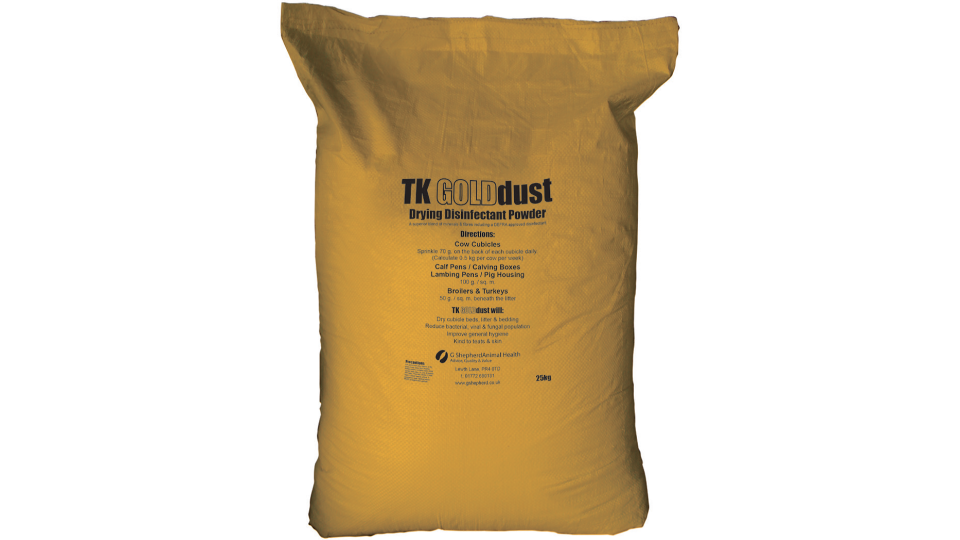
TK GOLDdust Bedding Powder. 20 or 40 x 25kg bags.
TK GOLDdust is a Drying Bedding Powder containing Sodium Dichloroisocyanurateas a chlorine releasing..
£624.41 £520.34
You might also like
Are we feeding live Johnes disease / MAP in calf milk replacer?
Are we feeding live Johnes / Mycobacterium avium subsp. paratuberculosis in calf milk replacer? S...Read more

SHEPHERD AGRI invests in dairy hygiene with new appointment
Better dairy hygiene products and advice can help farmers to boost animal health and productivity, a...Read more

Study shows heat-treated colostrum performs better
A study recently published in the Journal of Dairy Science showed that heat-treating colostrum suppo...Read more

Pasteurising milk and colostrum reduces calf scours
Pasteurising milk and colostrum for calf feeding is becoming more popular in the UK. ...Read more